
When most people think of Taita–Taveta County, their minds immediately go to Tsavo National Park, wildlife safaris, and dramatic landscapes. Yet beyond its elephants and vast savannahs lies one of Kenya’s most remarkable—and least celebrated—heritage regions. Taita–Taveta is a living archive of history, culture, spirituality, and global conflict, preserved in hills, caves, churches, canals, cemeteries, and sacred forests.
A detailed reconnaissance survey conducted by the National Museums of Kenya in collaboration with local communities reveals an extraordinary concentration of heritage sites across the region. These sites span thousands of years, from prehistoric ritual landscapes to World War I battlefields and colonial-era infrastructure. Together, they tell a powerful story of resilience, belief systems, cultural transformation, and the lasting impact of global events on local communities.
A Region at the Crossroads of Global History
Taita–Taveta occupies a unique geographical position along historic trade routes linking the Kenyan coast to the interior and to present-day Tanzania. This location made the region strategically important long before colonial rule—and critically significant during the First World War.
Between 1914 and 1918, Taita–Taveta became a major theatre in the East African Campaign. British and German forces clashed repeatedly across the hills and plains, leaving behind an enduring military landscape that still shapes the region today.
Sites such as Mwakitau Hill, Salaita Hill, and Cherege Hill bear the scars of intense fighting. Mwakitau Hill, in particular, was of immense strategic value to the British army, overlooking their first East African airfield and a garrison housing thousands of troops. Several skirmishes took place here, and it is believed that Lieutenant Dartnell, one of the most respected British officers, lost his life on this hill.
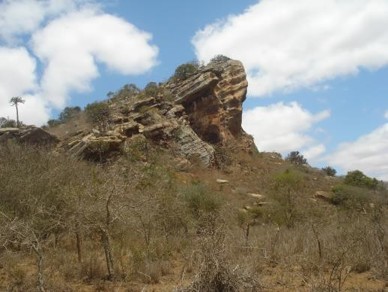
Salaita Hill—whose name translates locally to “place of slaughter”—was the scene of a devastating battle in February 1916, where hundreds of soldiers, many of them Indian troops fighting under British command, were killed. Today, the hill remains a dramatic and haunting reminder of the cost of war.
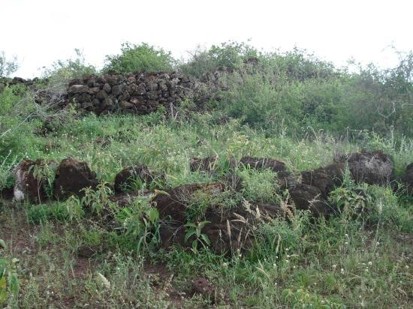
Cemeteries That Tell Global Stories
Scattered across Taita–Taveta are immaculately maintained war cemeteries that reflect the international nature of the conflict. Voi Commonwealth War Graves and Mwakitau (Maktau) War Graves (Indian Cemetery) serve as solemn memorials to soldiers from across the British Empire.
The Mwakitau Indian Cemetery is particularly significant. Oral traditions suggest that no bodies were actually buried there; instead, the monument symbolizes soldiers—many of Hindu faith—whose remains were cremated according to custom. The cemetery therefore functions as a powerful memorial rather than a burial ground, representing sacrifice, cultural diversity, and remembrance.
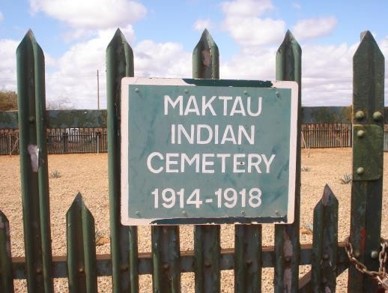
These sites are carefully maintained and protected, offering a dignified space for reflection and underscoring Taita–Taveta’s place in global history.
Military Infrastructure Frozen in Time
Beyond cemeteries, the region preserves rare examples of early 20th-century military engineering. The Mwashuma Railway Bridge, constructed in England in 1914 and shipped to Kenya, once served as a crucial supply route linking Mombasa to the British garrison at Mwakitau ( Mwakitau Railway Bridge) and onward to Moshi in Tanzania.
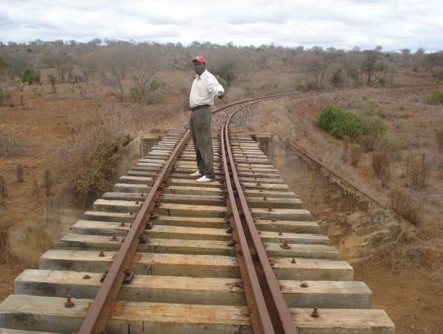
Repeatedly targeted by German raiding parties, the bridge remarkably still stands, a testament to exceptional workmanship and historical resilience. Nearby, Mashoti Fort, an earthen British outpost built using clay and local materials, reveals how military forces adapted construction techniques to local environments.
Together, these sites offer invaluable educational opportunities for understanding colonial warfare, engineering, and logistics in East Africa.
Ancient Traditions and Sacred Landscapes
Long before the arrival of missionaries or colonial administrators, the Taita and Taveta peoples had developed complex spiritual, cultural, and governance systems deeply connected to the land. Many of these traditions are preserved in sacred caves, rock shelters, and forests that remain culturally significant to this day.
One of the most striking examples is Sagalla Skulls Cave, where the Sagalla people traditionally preserved the skulls of their ancestors in rock shelters. This practice, shared among several Taita groups and their Taveta neighbors, was rooted in beliefs about ancestry, continuity, and spiritual protection.

Other sacred sites—such as Ngomenyi Kwentole, Mlunguni Rock Shelter, and Mwanfunja Cave—continue to be revered, even after the widespread adoption of Christianity. In many cases, strict protocols govern access to these areas, reinforcing their spiritual importance and aiding in their preservation.
Sacred groves like Kwa Anose (Fighi Forest) stand as rare ecological sanctuaries, protected for generations by cultural belief systems. These forests not only hold spiritual meaning but also preserve biodiversity in areas otherwise dominated by agriculture.
Prehistoric Art, Rituals, and Early Innovation
Taita–Taveta also holds evidence of prehistoric human activity that predates written history by thousands of years. Grinding rocks and kettles, such as those found at Goe and Kishamba, are believed to be over 8,000 years old. While once thought to be grinding stones, research suggests many were used in ritual practices, possibly involving offerings or blood rites.
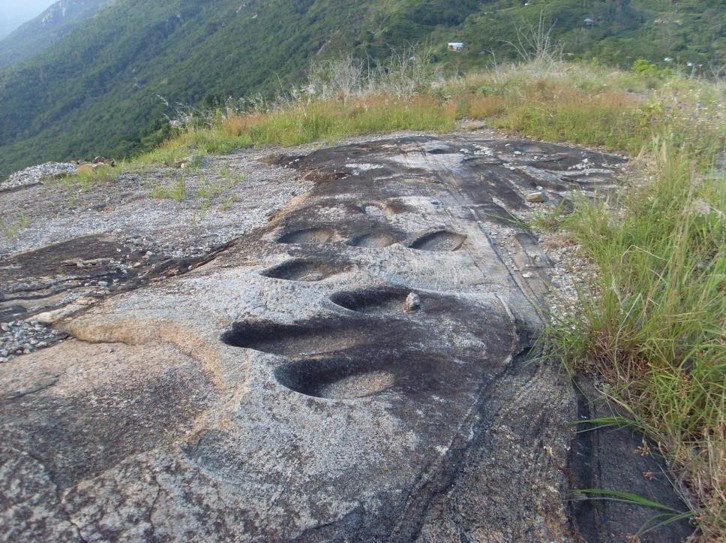
These rock features link the region to a broader network of African prehistoric art and ritual landscapes. Their continued existence provides rare opportunities for archaeological research and cultural education—if they are adequately protected from quarrying and agricultural encroachment.
Missionaries and Cultural Transformation
The late 19th and early 20th centuries brought profound social change to Taita–Taveta with the arrival of Christian missionaries. One of the most significant landmarks from this period is the Old St. Mark’s Church in Sagalla, built in 1900 by Reverend Joseph Wray of the Church Missionary Society.
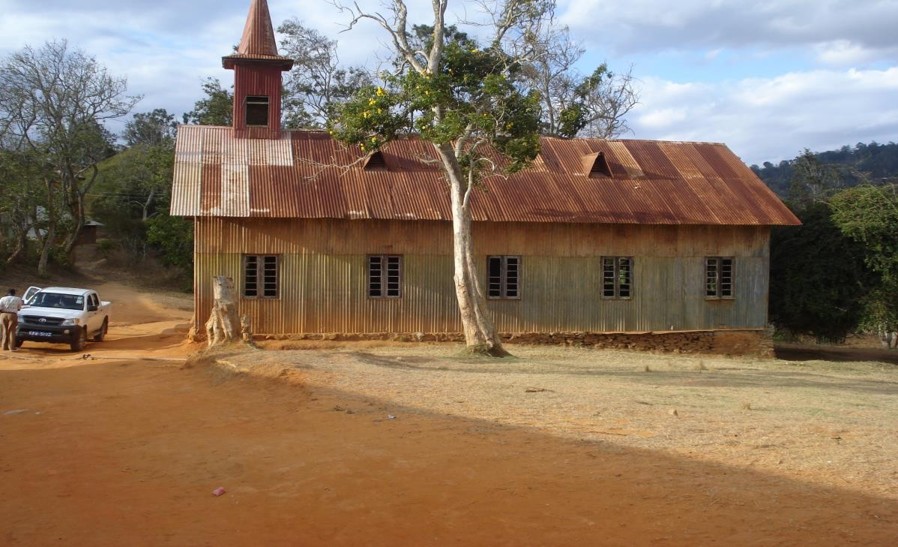
Sagalla was home to the first inland mission station established by the CMS in Kenya. The Old St. Mark’s Church—now the Wray Memorial Museum—symbolizes the transition from traditional belief systems to Christianity, as well as the introduction of Western education, healthcare, and infrastructure. Nearby buildings, including the pastor’s house and Wray Primary School, form part of a broader historical landscape that shaped modern Sagalla society.
Similarly, the Taveta ACK Graves and Holy Trinity Church at Mahoo document early missionary efforts in Taveta. The original church was bombed during World War I by German forces, who viewed missionaries as agents of British control. The surviving sites therefore reflect both spiritual dedication and the harsh realities of colonial conflict.

Colonial Power and Economic Transformation
Perhaps no figure looms larger in Taveta’s colonial history than Colonel Ewart Grogan. His legacy is visible in monumental structures such as the Grogan Castle, an imposing stone residence built at the center of his vast 81,000-acre estate.
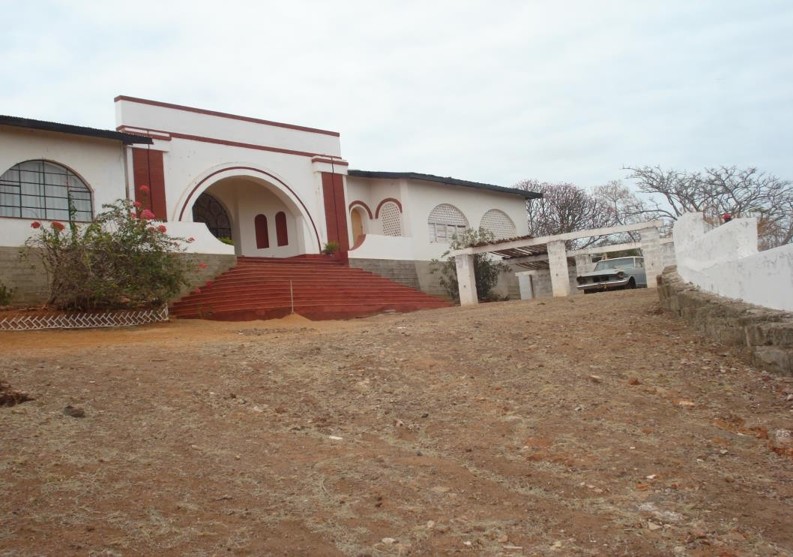
The castle, with its thick walls, bunker-like bedroom, and commanding views of Mount Kilimanjaro, represents both architectural mastery and the stark inequalities of colonial land ownership. Yet Grogan’s influence extended beyond architecture. He pioneered irrigation in Taveta through the construction of the Grogan Canal (Njoro Ndogo) and Njoro Kubwa (the Great Canal), diverting water from the Lumi River to support large-scale agriculture.
Today, these canals continue to sustain local farming, particularly banana cultivation, which forms the backbone of Taveta’s economy. While Grogan’s land acquisition remains controversial, his irrigation systems permanently transformed livelihoods in the region.
Governance, Justice, and Indigenous Institutions
Taita–Taveta’s heritage is not limited to sacred or colonial sites. Traditional governance and justice systems are preserved in places like Ngondi (Taveta Parliament) and Kishiki cha Ndeghe, where elders once deliberated, passed judgments, and maintained social order.
These sites illustrate sophisticated indigenous political systems that existed long before modern administration. Although many are no longer actively used, they remain culturally significant and provide insight into community organization, leadership, and accountability.
Threats to a Fragile Heritage
Despite their immense value, many heritage sites in Taita–Taveta face serious threats. Rapid development, unregulated tourism, quarrying, agricultural expansion, looting of artifacts, and simple neglect have already caused irreversible damage in some areas.
Mwakitau Hill, for example, has suffered extensive destruction due to tourism development carried out without proper heritage impact assessments. Other sites are slowly disappearing under vegetation or being dismantled for building materials.
Preserving the Past for the Future
The survey strongly recommends the gazettement of key sites as National Monuments, increased community awareness, professional conservation, and the creation of integrated heritage circuits. With proper protection and interpretation, Taita–Taveta has enormous potential as a cultural and heritage tourism destination—one that complements wildlife tourism while empowering local communities.
Preserving these sites is not merely about protecting physical remains. It is about safeguarding memory, identity, and knowledge systems passed down through generations.
Taita–Taveta’s heritage landscapes remind us that history is not confined to textbooks or museums. It lives in the land itself—in hills once fought over, caves still whispered about, and trees beneath which communities once gathered to shape their future. Protecting this heritage ensures that these stories continue to be told, not just for today, but for generations to come.
Pingback:hello world
Enjoy every single day